
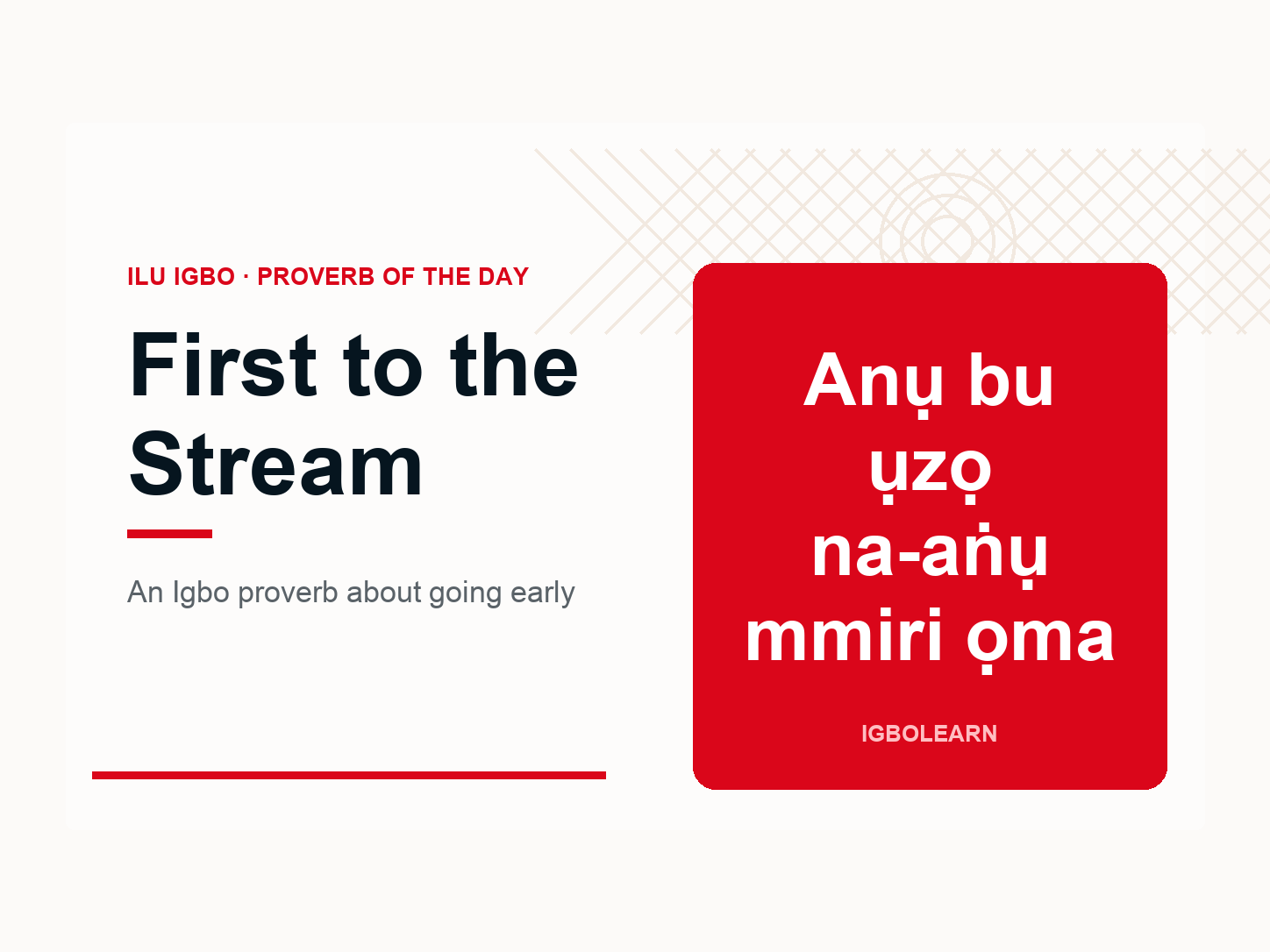
Anụ bu ụzọ na-aṅụ mmiri ọma.
The earliest animal to the stream drinks clean water.
Today’s proverb in the IgboLearn app, and the app gives its sense in four words: it pays to be ahead.
Why a stream makes the argument better than a queue
An English proverb about being early reaches for the worm: the early bird gets it, and the late bird simply goes without. That is a proverb about supply. There was one worm.
This one is sharper. Nobody runs out of water. The animals that come later get as much as they want — they just get it after everything ahead of them has waded in, stirred the bed and muddied it.
So the proverb is not about scarcity. It is about quality degrading with each person who goes before you: the second-hand opportunity, the picked-over market, the advice that has been through six people. You are not denied the thing. You are handed a worse version of it.
Word by word
| Igbo | English |
|---|---|
| anụ | animal (also: meat) |
| bu ụzọ | goes first; leads the way |
| na-aṅụ | drinks |
| mmiri | water |
| ọma | good; fine |
Bu ụzọ is worth stealing for your own sentences. Literally it is carry the road — to be the one out front. Ụzọ is the road or the way, and it turns up everywhere, including in the verse about committing your work.
The two words you must not confuse
| Igbo | English |
|---|---|
| anụ | meat; animal |
| aṅụ | bee — and, as a verb, to drink |
One dot, one word apart. Both appear in this single proverb: the anụ at the start is the animal, the aṅụ in the middle is the drinking.
Search the IgboLearn dictionary for anu without the marks and it will offer you the bee before the meat. That is not a fault in the dictionary — it is the honest consequence of typing a word without the letters that distinguish it. Worth remembering the next time you copy Igbo from a WhatsApp message written in plain ASCII.
How it is actually used
As encouragement, usually to someone young, and usually about something boring: apply now, not in March. Go to the farm before the sun is up. Register early. Put your name down.
It is also said, less kindly, about someone who did not — in which case it is not advice any more but a verdict, delivered gently enough that nobody has to respond to it.
A proverb a day, with the audio. Look up mmiri or ụzọ in the IgboLearn dictionary, or get the free app. For another proverb about reading a situation, see it takes sense to shoot a baboon.
Discover more from IgboLearn Blog
Subscribe to get the latest posts sent to your email.