
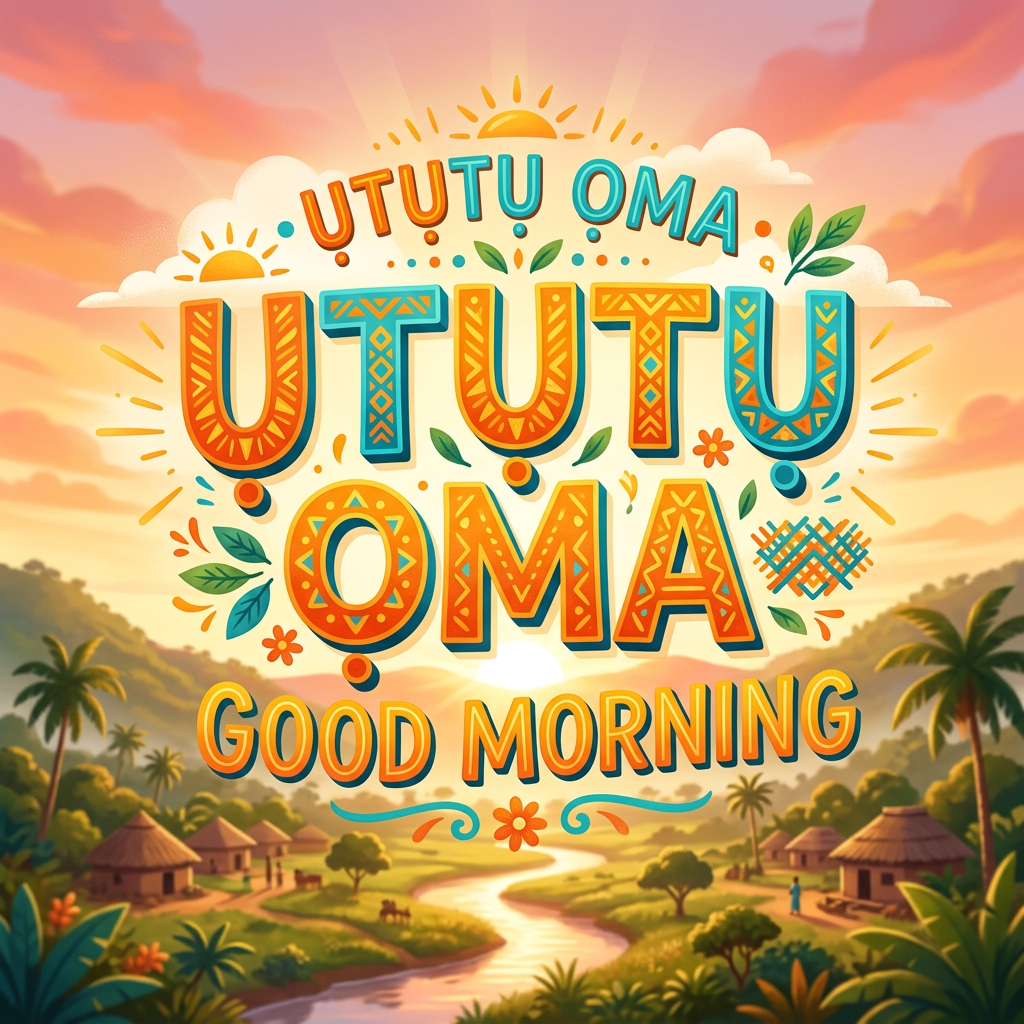
The literal answer is:
Ụtụtụ ọma — OO-too-too AW-mah
Hear it and see it in context on IgboLearn →
Word-for-word: morning good.
But Igbo morning greetings aren’t really about the morning. They’re about acknowledgment. Saying Ụtụtụ ọma to someone is less “have a good day” and more I see that you are here, alive, with me, in this morning. Not greeting an elder in the morning isn’t lazy. It’s an offense.
This is one of the first things diaspora kids get wrong when visiting family — and one of the first things grandparents notice.
Igbo doesn’t greet the morning the way English does
In English, “good morning” is autopilot. You can say it without making eye contact. It happens in elevators between strangers. It costs nothing.
In Igbo, the morning greeting is a small ceremony.
- You greet elders first, individually. Not “good morning everyone” — Ụtụtụ ọma, mama. Ụtụtụ ọma, papa. Ụtụtụ ọma, daa. One by one. Each person gets named or acknowledged.
- It’s often paired with a small gesture. A bow, a curtsy, knees slightly bent. The body greets along with the voice.
- It’s a check-in, not a goodbye. A typical Igbo morning greeting opens a conversation: Ụtụtụ ọma. Kedu ka ị bọrọ? — good morning, how did you wake? The English instinct is to greet-and-pass. The Igbo instinct is to greet-and-ask.
- It’s owed. Skipping the morning greeting to an elder is a real social mistake. Not a small one.
Diaspora kids visiting Nigeria often default to a quick “morning!” on their way to the kitchen and don’t understand why an aunty looks slightly hurt.
Variations to know
- Ụtụtụ ọma — good morning. The standard.
- Ị bọọla chi — you have awakened with the day. More poetic; an elder might say this back.
- Kedu ka ị bọrọ — how did you wake? The morning version of “how are you.”
- Chi ọma — good day / good dawn. Shorter, casual.
- Daalụ chi — thanks to the day. A respectful morning acknowledgment to God / the day itself.
When to say it
- First contact of the day with anyone in your household. Especially elders. Ụtụtụ ọma before anything else — before asking for the bathroom, the kettle, the news.
- When you walk into a room with people already in it. Even if you mumbled hello five minutes ago. A proper Ụtụtụ ọma greets the room.
- Phone call with a parent before noon. Don’t lead with the reason for the call. Mama, ụtụtụ ọma. Then everything else.
- Walking through the village or neighborhood. Greet every elder you pass. Walking past silently is rude in a way English-speakers won’t naturally feel.
Teaching it to your kids
This is the daily-habit phrase. The one that pays off forever.
Three minutes:
- Say Ụtụtụ ọma — OO-too-too AW-mah. Practice the rolling rhythm.
- Make it the first thing they say to you every morning, before anything else. (You say it back.)
- Tell them: this is what you say to grandma before you ask for breakfast.
Make it a household ritual. Six months in, your child will greet their grandmother in Igbo before they’ve even put their shoes on — and your mother-in-law will tell every other aunty in Lagos about it.
Practice Ụtụtụ ọma on IgboLearn →
For more everyday Igbo phrases — greetings, family terms, expressions of care — IgboLearn’s free starter pack has 50 essentials you can teach in a week.
Get the starter pack →