
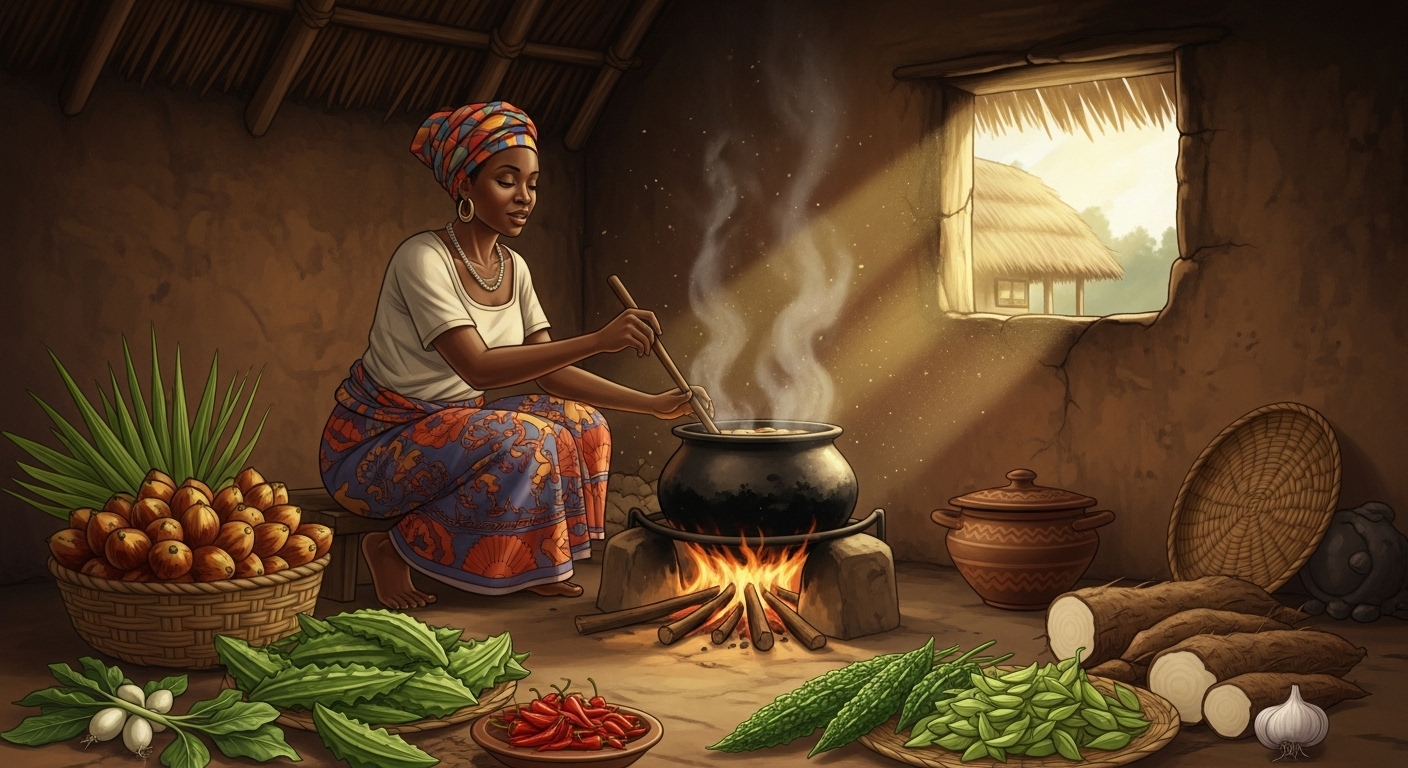
When you think of the Igbo people of Nigeria, culture, respect, and community instantly come to mind. But equally iconic, if not more, is the food. The Igbo have perhaps the most diverse variety of soups in all of Nigeria, each with its own distinct taste, preparation, and cultural significance.
These delicacies don’t just fill the stomach; they leave you asking, “How did someone even come up with this combination?”
Imo State: My First Taste of Igbo Soups
I am from Imo State, and like most people, my earliest experiences of Igbo soups came from home. In Imo, ofe Owerri is king, the flagship native soup that every visitor must taste. It is so famous that locals say, “If you haven’t eaten ofe Owerri, you haven’t really visited Imo State.”
Made with a rich mix of vegetables, assorted meats, and stockfish, this soup represents hospitality and abundance. Recently, I heard about a new restaurant in Owerri that specializes in it, proving once again how timeless this dish is.
Beyond ofe Owerri, Imo people also relish soups like oha, anara soup, ogbono, okra, uziza, utazi, and the special ofe eju. Each carries not just flavor, but history and identity.
The Diversity Across Igbo Land

The beauty of being Igbo is that every state, and sometimes even every community, has its own culinary signature. While I grew up mostly with Imo soups, I got to explore others through friends and travels.
I remember vividly in school when my friend from Anambra brought olugbo soup (bitterleaf soup) his mother had prepared. It was one of the richest, most flavorful bitterleaf soups I had ever tasted. It reminded me that while the recipes vary, the pride and mastery of cooking is something all Igbo families share.
From Nsukka’s utazi soups to Abia’s akwu (banga stew) and Enugu’s achara soup, the diversity is endless. Traveling through Igboland feels like a continuous culinary adventure, you are never short of options.
A Mother’s Kitchen
I count myself lucky to have grown up with a mother who was exceptionally talented in the kitchen. She didn’t just cook, she poured her heart into every meal. Looking back, I realize how much of my childhood joy came from those meals.
At one point, when we lived in Lagos, she ran a small restaurant. One afternoon, a man walked in and confessed that he had been tracing the aroma of her cooking all the way from his office. That’s how irresistible her food was. And even though it was a business, my mother never compromised on quality because we, her family, also ate from the same pots.
Food in my home wasn’t just survival; it was love, artistry, and culture.
Food, Family, and Festivities
Now that my family is scattered across different cities and countries, food has become even more significant. During festive periods and special celebrations, we all return home to Imo, and one of the first things I do is indulge in a proper native meal.
It has become a ritual: my first stop is always my favorite local restaurant, where I welcome myself back with a steaming plate of soup and swallow. That first taste is more than a meal, it’s a reconnection to roots, to childhood, to home.
Outside Igboland, it is often hard to find meals that taste the same. And when I do stumble on something close, my appreciation for home cooking deepens even more.
Why Igbo Soups Are More Than Food
To an outsider, Igbo soups may just look like an array of dishes. But to the Igbo person, they are symbols of identity, community, and pride. Each bowl tells a story of the land it came from, the people who perfected the recipe, and the families that keep the tradition alive.
Igbo soups are not just about taste, they are about belonging. They are what bring families together after long journeys. They are what strangers bond over at weddings, funerals, or village gatherings. They are a reminder that food is more than sustenance, it is culture preserved on a plate.
So the next time you find yourself in Igboland, don’t just ask for “something to eat.” Ask for ofe Owerri, oha, olugbo, or uziza. Taste them, savor them, and you’ll understand why the Igbo say their soups are not just meals but heritage served in a bowl.