
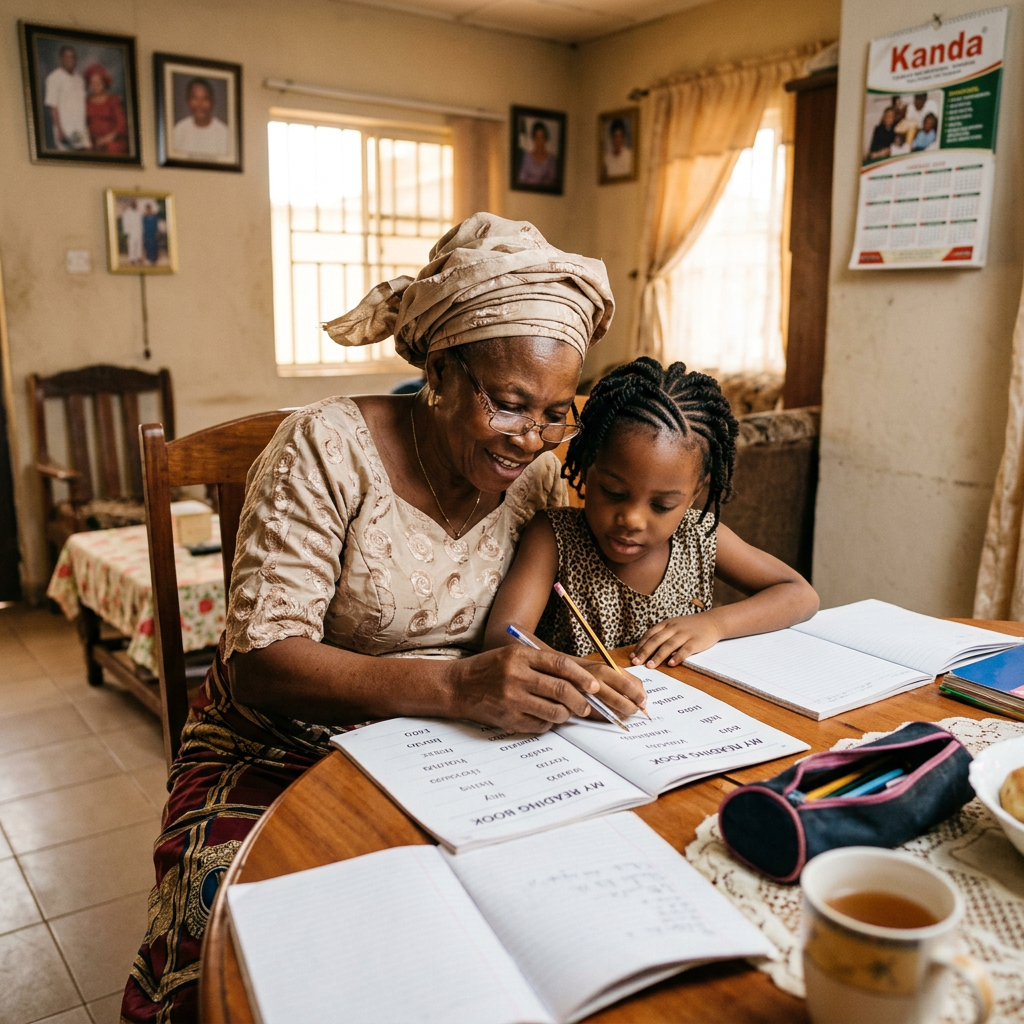
In 2006, a UNESCO report quietly noted something most Igbos already suspected: Igbo, despite having 30+ million speakers, is on a trajectory toward serious endangerment within the next few generations. The reason wasn’t lack of speakers. It was lack of transmission and too few children learning the language at home as their first or primary tongue.
That report didn’t get the attention it deserved. But its underlying claim that a language with 30 million speakers can still die is one every diaspora Igbo family eventually has to face.
How can a language with 30 million speakers be at risk?
Language extinction isn’t about absolute numbers. It’s about whether the language reaches the next generation as a primary language.
In urban Nigeria, English is the language of school, of social media, of upward mobility. Children who speak Igbo at home often respond in English. By university, many Igbo Nigerians are receptively fluent but productively shaky — they understand their parents, but their own Igbo is halting.
In the diaspora, the cliff is even steeper. The default language outside the home is English (or French, or German, or whatever). Without active reinforcement at home, the language stops with the immigrant generation.
Why this matters beyond sentiment
You might be reading this and thinking well, languages come and go — should I really worry? Three reasons it’s worth caring:
- Culture rides on language. Igbo proverbs, naming traditions, songs, and humor don’t translate cleanly. When the language goes, those go with it. You lose more than vocabulary — you lose ways of thinking.
- Identity is at stake. Children who grow up cut off from their heritage language often have a quieter, harder-to-name kind of loneliness. The bridge to grandparents and ancestral land weakens.
- It’s a one-way door. When a language dies, it doesn’t usually come back. Hebrew is the famous exception. Most aren’t.
What you can actually do
The good news: language preservation is one of the few cultural problems where individual action matters. Each family that keeps Igbo alive raises the survival probability by a measurable amount.
Speak it at home. Even imperfectly. Even just greetings. Children learn far more from immersion than from any classroom.
Find Igbo-speaking community. If you live in London, NYC, Houston, or Atlanta, there’s probably an Igbo association or church group nearby. Show up. Bring the kids.
Use technology when humans aren’t available. Apps like IgboLearn aren’t a substitute for a grandmother, but they’re a serious supplement — and they’re available at 7am on a Tuesday when your kid needs a quiz.
Don’t conflate “good enough” with “give up.” A child who speaks broken Igbo with confidence is doing more for the language than ten heritage speakers who feel too embarrassed to try.
The next generation isn’t optional
Every language that’s survived an extinction event survived because someone — usually parents — decided their household would be a holdout. That’s the only known intervention that works.
You don’t have to fix Igbo. You just have to keep it alive in your house. That’s all.
Onye kwe, chi ya ekwe.
If one believes, their personal god agrees.
Start the simplest possible habit. Three minutes a day. Pass it on.