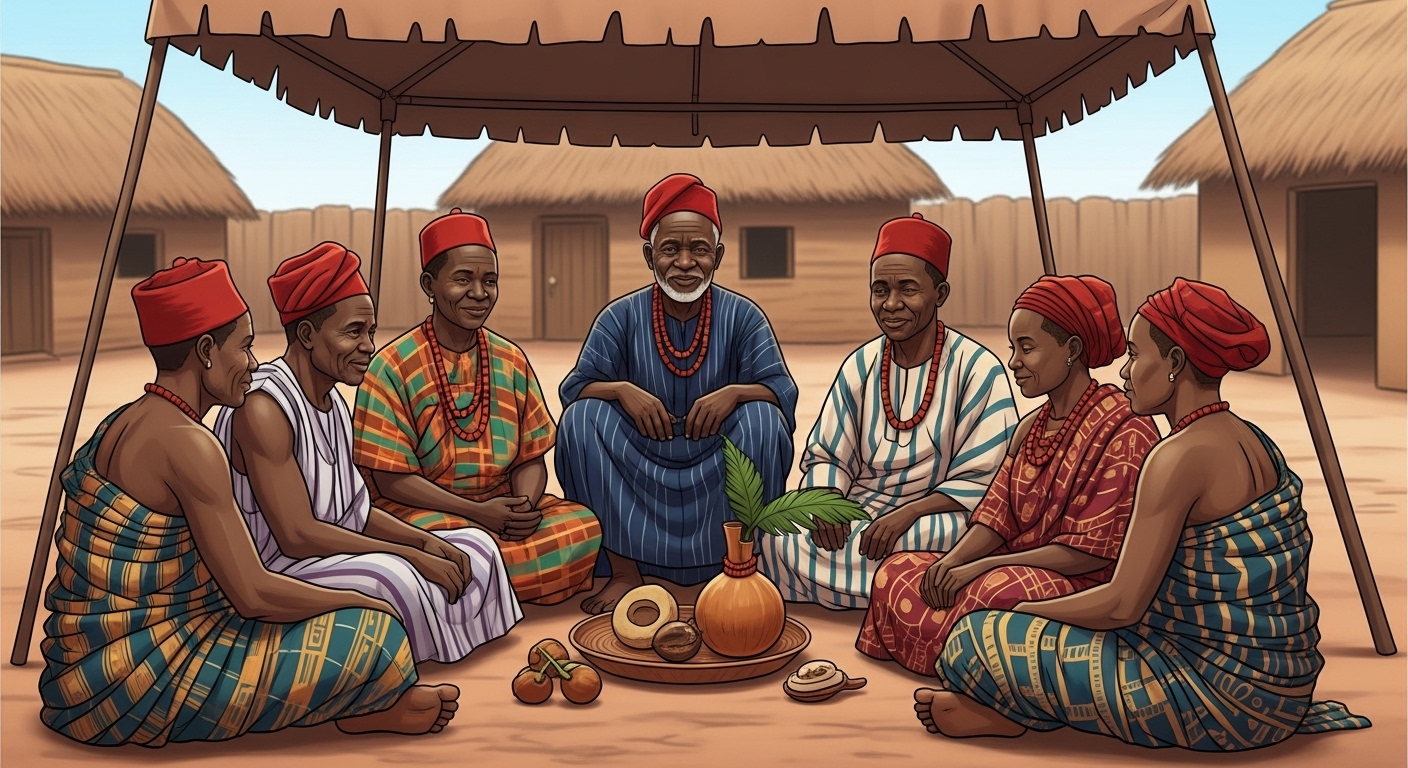

Growing up as an Igbo person, One quickly learns that our culture is not only about festivities, food, or attire. It is about protocols, respect, and deeply rooted traditions that guide how we live and interact. For many who spend time away from their homeland, returning often comes with a cultural reminder. Sometimes, even community meetings include fines to show just how seriously the Igbo people preserve their heritage.
The Subtle Protocols of Everyday Life
As a child raised in the township, I occasionally visited my hometown. Every trip revealed something new about the richness of Igbo traditions. Moving around with my older cousins, I noticed that almost everything had a protocol, especially when elders gathered.
One experience stands out. I went out one evening with my cousin and found myself surrounded by seniors. Drinks were served. I wanted to reach for a bottle to help myself, but I paused. A bottle was first passed to the eldest in the group. He acknowledged it, nodded, and only then did everyone join in. That simple act taught me an important lesson: in Igbo culture, even leisure follows respect and order.
Age Grades: Equality and Brotherhood

One of the most unique and exciting aspects of Igbo culture is the age grade system (ọgbọ). This is a social structure where people within a certain age bracket form a group. Within the age grade, all members are equals, regardless of the wealth, power, or influence they may have outside of the group.
For instance, a man could be a wealthy businessman or a political leader, but once he enters his age-grade meeting, he is no more important than his peers. This equality fosters strong bonds, a sense of unity, and sometimes the most hilarious banter.
Visitors, especially younger ones are sometimes allowed to observe such gatherings. They can enjoy the music, the jokes, and the merriment, but they are not expected to speak unless invited to. Even among peers in these meetings, strict rules apply, and any breach often comes with immediate fines. These fines, however, are less about punishment and more about keeping tradition alive and instilling discipline.
Family Gatherings and Community Life
Family meetings also mirror this cultural discipline. Whether it’s resolving disputes, planning events, or simply keeping the family connected, there are unspoken rules that govern how conversations are had and how elders are respected. These unspoken rules are not just about behavior, they are carried in the way we speak and the words we use. As highlighted in The Vision Behind IgboLearn, language is more than vocabulary; it’s the vessel that carries culture into every gathering.”
Younger members often serve as listeners, while elders lead the discussions. It is in these meetings that values of respect, patience, and responsibility are passed down to the next generation.
Respect in Igbo Culture
Unlike some cultures where people physically lie flat on the floor to greet elders, the Igbo way of respect is subtler but deeply profound. It is reflected in speech, in gestures, and in the unspoken acknowledgment of seniority. Respect is the thread that ties all Igbo gatherings together.
Every encounter, whether in community meetings, ceremonies, or even casual hangouts, carries a reminder that elders hold a special place in society. It is through them that traditions are preserved and values handed down.
Why Connecting Back Matters

For those who live far from their roots, reconnecting with Igbo traditions is not just nostalgic, it is essential. These cultural practices teach patience, humility, order, and the value of community. They remind us that no matter how far we travel or how much we achieve, there is wisdom in the ways of our people.
The Igbo cultural heritage is not merely history; it is a living system that continues to shape individuals, families, and communities. From protocols in gatherings to the laughter in age-grade meetings, from family rules to reverence for elders, the culture is a constant call to respect and belonging.
And perhaps, the next time you visit your hometown and find yourself being fined at a meeting, you will smile, not out of annoyance, but out of pride, knowing you are part of something rich, deep, and timeless.
Leave a Reply